

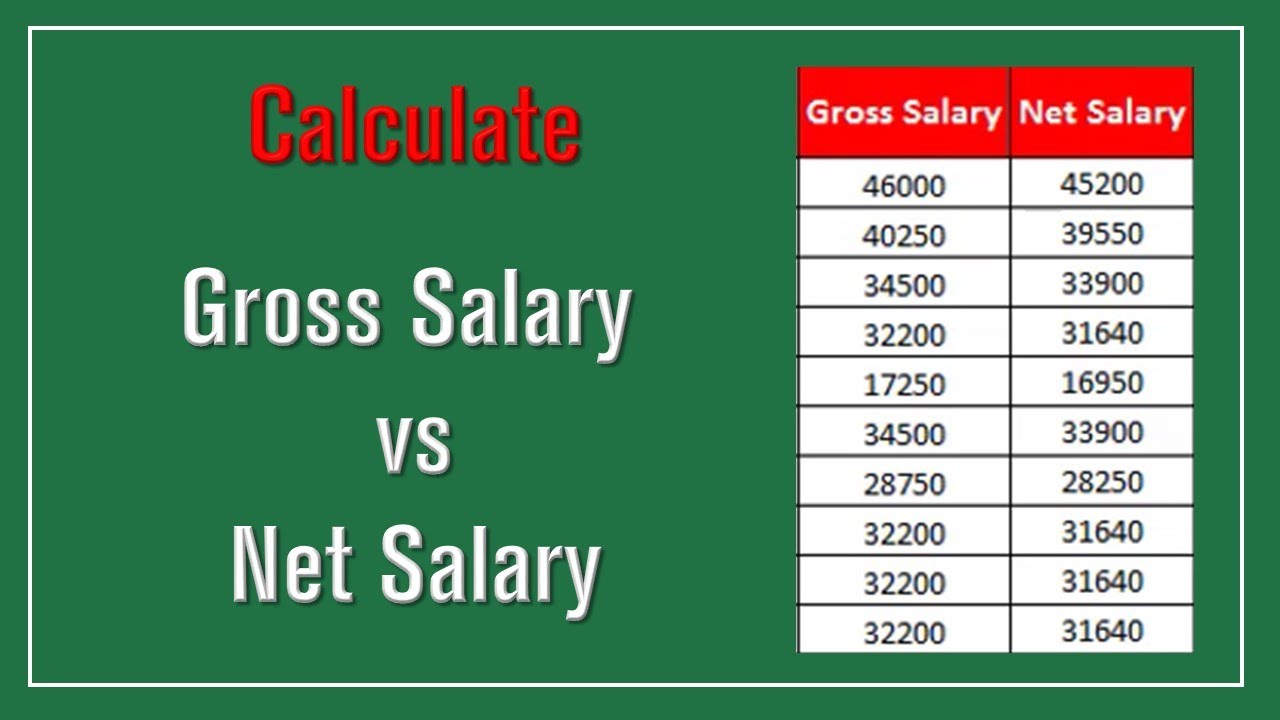
- Introduction: The $10,000 Question You Ask Every Payday
- Understanding Your Paycheck: Gross vs. Net Salary
- Step-by-Step Guide: How to Calculate Your 2026 Net Salary
- Complete Calculation Examples
- New for 2026: Tax Changes You Should Know
- Why You Need a Paycheck Calculator (And Which Ones to Use)
- Tips to Maximize Your Take-Home Pay
- Frequently Asked Questions
- How do I calculate my net salary after tax for 2026?
- What are the 2026 federal tax brackets?
- How much will I pay in Social Security and Medicare taxes in 2026?
- Does state income tax vary significantly across the US?
- What new tax deductions are available for 2026?
- How do bonuses affect my tax withholding?
- Take Control of Your Financial Future
Introduction: The $10,000 Question You Ask Every Payday
Have you ever stared at your pay stub and wondered, « Where did all my money go? » You’re not alone. The gap between your gross salary (the impressive number you negotiated) and your net salary (what actually hits your bank account) can feel like a financial mystery wrapped in bureaucratic jargon.
Here’s the hard truth: In 2026, the average American worker will see 22-35% of their paycheck disappear before they ever get a chance to spend it. For someone earning $75,000 annually, that’s potentially $18,000 to $26,000 diverted to taxes, Social Security, Medicare, and other deductions .
But here’s the good news: understanding exactly how your net salary is calculated puts you back in the driver’s seat. Whether you’re:
- Comparing job offers across different states
- Planning a major purchase like a home or car
- Budgeting for your family’s future
- Negotiating a raise and wondering what you’ll actually keep
This guide will walk you through everything you need to know about calculating your 2026 net salary after tax. We’ll cover the latest tax law changes, provide real-world examples, and share tools to make the math effortless.
Quick Tip: Before diving into manual calculations, consider using a reliable paycheck calculator app to do the heavy lifting. We’ll recommend some options later in this guide.
Understanding Your Paycheck: Gross vs. Net Salary
What Is Gross Salary?
Your gross salary is the total amount your employer agrees to pay you before any deductions. It’s the headline number in your job offer letter—for example, $85,000 per year or $40 per hour.
What Is Net Salary (Take-Home Pay)?
Net salary, also called take-home pay, is what remains after subtracting:
- Federal income tax
- State and local income taxes
- FICA taxes (Social Security and Medicare)
- Other deductions (health insurance, retirement contributions, etc.)
This is the money you actually have to spend, save, or invest. Never budget based on your gross salary—that’s a recipe for financial stress.
Step-by-Step Guide: How to Calculate Your 2026 Net Salary
Let’s break down the calculation process into manageable steps. By the end, you’ll be able to estimate your own take-home pay with confidence.
Step 1: Determine Your Gross Income
Start with your annual salary or hourly wage. If you’re paid hourly:
- Full-time (40 hours/week): Multiply your hourly rate × 2,080 hours (40 hours × 52 weeks)
- Part-time: Multiply your hourly rate × actual hours worked per year
Example: Maria earns $28 per hour working full-time.
$28 × 2,080 = $58,240 gross annual income
Step 2: Understand 2026 Federal Tax Brackets
The IRS has released official 2026 tax brackets under the One Big Beautiful Bill Act (OBBBA) , signed into law July 4, 2025 . Here’s what you need to know:
| Tax Rate | Single Filers | Married Filing Jointly | Head of Household |
|---|---|---|---|
| 10% | $0 to $12,400 | $0 to $24,800 | $0 to $17,700 |
| 12% | $12,401 to $50,400 | $24,801 to $100,800 | $17,701 to $67,450 |
| 22% | $50,401 to $105,700 | $100,801 to $211,400 | $67,451 to $105,700 |
| 24% | $105,701 to $201,775 | $211,401 to $403,550 | $105,701 to $201,775 |
| 32% | $201,776 to $256,225 | $403,551 to $512,450 | $201,776 to $256,200 |
| 35% | $256,226 to $640,600 | $512,451 to $768,700 | $256,201 to $640,600 |
| 37% | $640,601+ | $768,701+ | $640,601+ |
*Source: Internal Revenue Service *
Important: These are marginal tax rates. You don’t pay 22% on your entire income—only on the portion that falls within each bracket.
Step 3: Apply the Standard Deduction
Before calculating your tax, subtract the standard deduction from your gross income. For 2026:
- Single filers: $16,100
- Married filing jointly: $32,200
- Head of household: $24,150
- Married filing separately: $16,100
*Source: IRS *
Tax-Saving Tip: If your itemized deductions (mortgage interest, charitable contributions, medical expenses) exceed these amounts, you may save money by itemizing instead. Most taxpayers, however, benefit from the higher standard deduction.
Step 4: Calculate Federal Income Tax
Let’s walk through an example to make this concrete.
Example: David, Single Filer, $75,000 Gross Income
- Gross income: $75,000
- Subtract standard deduction: $75,000 – $16,100 = $58,900 taxable income
- Apply tax brackets:
- 10% on first $12,400 = $1,240
- 12% on next $37,999 ($12,401 to $50,400) = $4,560
- 22% on remaining $8,500 ($50,401 to $58,900) = $1,870
- Total federal income tax: $1,240 + $4,560 + $1,870 = $7,670
Step 5: Factor in FICA Taxes (Social Security & Medicare)
FICA taxes are separate from income tax and apply to nearly all workers .
| Tax Type | Rate | Wage Base Limit |
|---|---|---|
| Social Security | 6.2% | $184,600 (2026) |
| Medicare | 1.45% | No limit |
| Additional Medicare Tax | 0.9% | Over $200,000 (single) |
*Source: Texas Government , USPS *
For David earning $75,000:
- Social Security: $75,000 × 6.2% = $4,650
- Medicare: $75,000 × 1.45% = $1,087.50
- Total FICA: $5,737.50
Step 6: Add State Income Tax
State taxes vary dramatically. Here are the 2026 ranges:
- No income tax: Alaska, Florida, Nevada, New Hampshire, South Dakota, Tennessee, Texas, Washington, Wyoming
- Flat rate states: Colorado (4.63%), Illinois (4.95%), Indiana (3.0%), Kentucky (4.0%), Massachusetts (5.0%), Michigan (4.25%), North Carolina (4.5%), Pennsylvania (3.07%), Utah (4.65%)
- Graduated rate states: California (top rate 13.3%), Hawaii (top rate 11%), New York (top rate ~10.9%), and others
For David in a hypothetical 5% state tax state:
$75,000 × 5% = $3,750 state income tax
Warning: Some cities and counties also impose local income taxes! New York City residents pay an additional 3.876%, and residents of Indiana, Maryland, and Ohio may face county-level taxes .
Step 7: Account for Pre-Tax Deductions
Before calculating taxes, certain deductions come out of your paycheck pre-tax, reducing your taxable income:
- 401(k) contributions (up to $23,000 in 2026, plus $7,500 catch-up for 50+)
- Health insurance premiums
- Health Savings Account (HSA) contributions
- Flexible Spending Account (FSA) contributions
- Commuter benefits
Example with 401(k):
If David contributes 6% to his 401(k): $75,000 × 6% = $4,500 pre-tax
Taxable income reduces from $75,000 to $70,500 before calculations
Complete Calculation Examples
Example 1: Single Filer in Texas (No State Tax)
Profile: Alex, single, $65,000 salary, no state tax
| Calculation | Amount |
|---|---|
| Gross Annual Salary | $65,000 |
| Standard Deduction | -$16,100 |
| Taxable Income | $48,900 |
| Federal Income Tax (calculated) | $6,523 |
| Social Security (6.2%) | $4,030 |
| Medicare (1.45%) | $943 |
| Total Federal + FICA | $11,496 |
| Net Annual Take-Home | $53,504 |
| Monthly Take-Home | $4,459 |
Example 2: Married Couple in California (Joint Filers)
Profile: Jamie and Taylor, married filing jointly, $150,000 combined income, California resident
| Calculation | Amount |
|---|---|
| Gross Annual Salary | $150,000 |
| Standard Deduction (joint) | -$32,200 |
| Taxable Income | $117,800 |
| Federal Income Tax | $16,387 |
| Social Security (up to limit) | $9,300 |
| Medicare (1.45%) | $2,175 |
| California State Tax (approx.) | $6,800 |
| Total Deductions | $34,662 |
| Net Annual Take-Home | $115,338 |
| Monthly Take-Home | $9,612 |
*Note: California has a progressive tax system with rates from 1% to 13.3% *
Example 3: High Earner with Additional Medicare Tax
Profile: Morgan, single, $250,000 salary, New York resident
| Calculation | Amount |
|---|---|
| Gross Annual Salary | $250,000 |
| Standard Deduction | -$16,100 |
| Taxable Income | $233,900 |
| Federal Income Tax | $47,387 |
| Social Security (capped at $184,600) | $11,445 |
| Medicare (1.45% on all) | $3,625 |
| Additional Medicare Tax (0.9% on $50,000 over $200k) | $450 |
| New York State Tax (approx.) | $15,800 |
| NYC Local Tax (if applicable) | $9,250 |
| Total Deductions | $87,957 |
| Net Annual Take-Home | $162,043 |
| Monthly Take-Home | $13,504 |
New for 2026: Tax Changes You Should Know
The One Big Beautiful Bill Act (OBBBA) introduced several provisions that affect your 2026 take-home pay :
1. Higher Standard Deductions
As shown above, standard deductions increased for 2026:
- Single: $16,100 (up from $15,750 in 2025)
- Joint: $32,200 (up from $31,500 in 2025)
2. New Deductions
For 2026-2028, you may qualify for:
- Tip income deduction: Up to $25,000 for qualified tips (phases out at $150,000 AGI)
- Overtime pay deduction: Up to $12,500 ($25,000 joint) for overtime exceeding regular rate
- Car loan interest deduction: Up to $10,000 for qualified US-assembled vehicles (phases out at $100,000 AGI)
- Senior deduction: Additional $6,000 for taxpayers 65+ (phases out at $75,000 AGI)
3. Child Tax Credit
- Credit amount: $2,200 per qualifying child for 2026
- Refundable portion: Up to $1,700
- Phaseout begins: $200,000 (single) / $400,000 (joint)
4. Adoption Credit
- Maximum credit: $17,670
- Refundable portion: $5,120
- Phaseout range: $265,080 – $305,080 MAGI
Why You Need a Paycheck Calculator (And Which Ones to Use)
Manual calculations are educational, but let’s be honest—they’re also time-consuming and error-prone. That’s where paycheck calculators come in.
Benefits of Using a Calculator:
- Accuracy: Automatically applies current tax rates and brackets
- Speed: Get results in seconds, not minutes
- Scenario planning: Compare job offers, relocation options, or raise impacts
- Visual breakdowns: See exactly where your money goes
Recommended Tools for 2026:
📱 My Paycheck Calculator (iOS)
Comprehensive app supporting all 50 states, retirement contributions, and multiple income sources. Includes 2026 tax updates and the new OBBBA deductions for tips, overtime, and car loan interest .
📱 Paycheck Calculator US – Pay44 (iOS)
Great for quick estimates with hourly or salary inputs. Features include W-4 inputs, pre/post-tax deductions, and budget planning tools. All calculations run on-device for privacy .
💻 Online Calculators
Many tax software providers offer free online calculators that sync with their filing platforms—perfect for year-round planning.
Affiliate Opportunity: Check out our recommended tax software partners below for accurate 2026 calculations and seamless tax filing.
Tips to Maximize Your Take-Home Pay
1. Optimize Your W-4 Withholding
The W-4 form tells your employer how much federal tax to withhold. Adjust it if you:
- Consistently get large refunds (you’re giving the IRS an interest-free loan)
- Owe money each year (you may face penalties)
- Experience life changes (marriage, children, new job)
2. Contribute to Pre-Tax Accounts
Every dollar you contribute to a 401(k), HSA, or FSA reduces your taxable income dollar-for-dollar. For someone in the 22% bracket, a $5,000 401(k) contribution saves $1,100 in federal taxes.
3. Consider Your State Tax Situation
If you work remotely or are considering relocation, state taxes matter tremendously. Moving from California to Texas could save you 10-13% of your income in state taxes alone .
4. Claim All Eligible Credits
Don’t leave money on the table. Common credits include:
- Child Tax Credit (up to $2,200 per child)
- Earned Income Tax Credit (for low-to-moderate income workers)
- Saver’s Credit (for retirement contributions)
- Education credits (for tuition and fees)
5. Time Your Bonuses and Stock Sales
Large bonuses can push you into higher tax brackets. Consider:
- Deferring bonuses to the next tax year if possible
- Selling investments held over one year for lower capital gains rates
- Harvesting investment losses to offset gains
Frequently Asked Questions
How do I calculate my net salary after tax for 2026?
Start with your gross income, subtract pre-tax deductions (401(k), health insurance), then subtract the appropriate standard deduction ($16,100 for single filers). Apply the 2026 federal tax brackets to your taxable income, then subtract FICA taxes (7.65% up to $184,600, plus 0.9% additional Medicare if over $200,000). Finally, subtract your state and local taxes. For accuracy, use a paycheck calculator app that’s updated for 2026 rates .
What are the 2026 federal tax brackets?
For 2026, the tax brackets are: 10% ($0-$12,400 single), 12% ($12,401-$50,400), 22% ($50,401-$105,700), 24% ($105,701-$201,775), 32% ($201,776-$256,225), 35% ($256,226-$640,600), and 37% ($640,601+) . Married filing jointly brackets are approximately double these amounts.
How much will I pay in Social Security and Medicare taxes in 2026?
You’ll pay 6.2% for Social Security on earnings up to $184,600, and 1.45% for Medicare on all earnings. If you earn over $200,000 (single), you’ll pay an additional 0.9% Medicare tax on the excess . Your employer matches these amounts, but that doesn’t affect your take-home pay.
Does state income tax vary significantly across the US?
Absolutely. Nine states have no income tax at all (Alaska, Florida, Nevada, New Hampshire, South Dakota, Tennessee, Texas, Washington, Wyoming). Others like California (top rate 13.3%), Hawaii (11%), and New York (~10.9%) have much higher rates . Some cities also impose local income taxes, notably New York City (up to 3.876%) and various jurisdictions in Indiana, Maryland, Ohio, and Pennsylvania .
What new tax deductions are available for 2026?
The One Big Beautiful Bill Act introduced several new deductions for 2026-2028: tip income deduction (up to $25,000), overtime pay deduction (up to $12,500), car loan interest deduction (up to $10,000 for US-assembled vehicles), and a senior deduction (additional $6,000 for taxpayers 65+) . These phase out at higher income levels.
How do bonuses affect my tax withholding?
Bonuses are considered supplemental wages and are often withheld at a flat 22% federal rate, plus applicable FICA and state taxes. However, because bonuses add to your total annual income, they may push you into a higher tax bracket, potentially resulting in additional tax when you file your return .
Take Control of Your Financial Future
Understanding your net salary isn’t just about satisfying curiosity—it’s about empowerment. When you know exactly what you’ll take home, you can:
- Budget with confidence, knowing your true disposable income
- Evaluate job offers based on real numbers, not just gross salary
- Plan for major life events like buying a home or starting a family
- Optimize your tax situation year-round, not just at filing time
The 2026 tax landscape brings both continuity (familiar bracket structures) and change (new deductions for tips, overtime, and car loans). By staying informed and using the right tools, you can minimize your tax burden and maximize what lands in your pocket.
Ready to Calculate Your 2026 Take-Home Pay?
Don’t leave money on the table. Try one of these recommended tools today:
- My Paycheck Calculator – Comprehensive iOS app with all 50 states and 2026 updates
- Paycheck Calculator US – Pay44 – Quick, accurate estimates with privacy-focused design
- TurboTax – Coming soon: 2026 tax calculator and filing software
- H&R Block – Free online calculator and professional tax preparation options
Your money works hard for you. Make sure you know exactly where it’s going.
Disclaimer: This article provides general tax information and should not be considered professional tax advice. Tax laws are complex and subject to change. Consult a qualified tax professional for advice specific to your situation.

Un commentaire
Hi, this is a comment.
To get started with moderating, editing, and deleting comments, please visit the Comments screen in the dashboard.
Commenter avatars come from Gravatar.